
PEHEDAL-ESKD
Physical Exercise in Hemodialysis Patients in End Stage Kidney Disease
PEHEDAL-ESKD develops an innovative model of intradialytic physical exercise to improve health, physical performance and quality of life in patients with end-stage kidney disease. The project Integrates motor training, multidimensional assessment and a multidisciplinary team.
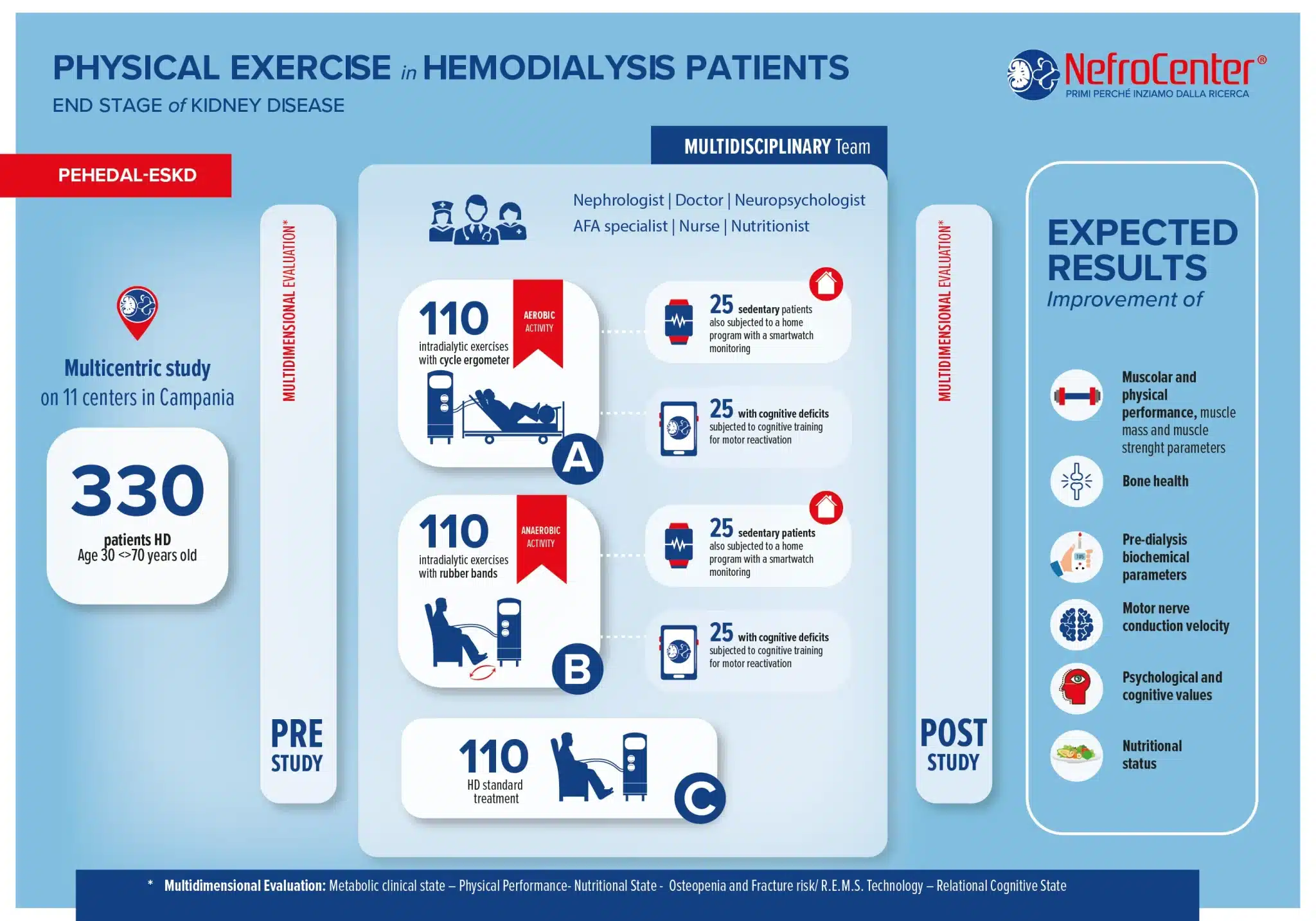
The project
Physical Exercise in Hemodialysis Patients in End Stage Kidney Disease is a Research and Development project aimed at assessing the effects of intradialytic physical activity in patients with end-stage kidney disease (ESKD) (End Stage Kidney Disease, ESKD) undergoing haemodialysis treatment. The project involves a prospective, multicentre, non-pharmacological intervention study on 330 patients randomised into three groups: aerobic activity using a cycle ergometer, anaerobic activity using resistance exercises, and a control group. The project approach integrates a multidimensional assessment of the clinical, nutritional, cognitive and functional aspects of the patient, including exercise and cognitive training programmes and monitoring through wearable devices.The project also introduces a dedicated multidisciplinary team with the aim of developing personalised and sustainable therapeutic strategies.
Results
The objective of the PEHEDAL-ESKD project is to assess the efficacy and tolerability of intradialytic physical exercise in patients with ESKD undergoing haemodialysis. The specific objectives include: comparing aerobic and resistance exercise programmes; assessing the effects of the intervention on physical performance, muscle strength and clinical outcomes; analysing the impact on quality of life and on cognitive and psychological aspects; evaluating the impact of a multidisciplinary team on treatment adherence; studying the contribution of home physical-activity programmes supported by wearable devices for monitoring exercise behaviour; assessing the effects of exercise on neuromuscular function and ESKD-related peripheral neuropathy; analysing the contribution of cognitive-training programmes integrated with motor activity; and promoting personalised and sustainable therapeutic models in the management of the haemodialysis patient.The PEHEDAL-ESKD project demonstrated significant benefits of intradialytic physical activity in patients undergoing haemodialysis. The results obtained showed an improvement in haemodynamic parameters, with a reduction in systolic blood pressure and mean arterial pressure in the groups undergoing physical exercise. Aerobic training using a cycle ergometer produced the greatest increase in exercise capacity and quality of life, while resistance training showed more marked results in improving lower-limb muscle strength. Both interventions improved functional capacity. The project also had a significant impact on patients, promoting greater autonomy, counteracting the physical deterioration associated with a sedentary lifestyle and fostering more active participation in the treatment pathway.
